

What the 3-faan minimum means
Hong Kong mahjong scores in faan. A winning hand needs four sets and a pair (or a special hand such as thirteen orphans) and at least 3 faan in total. That floor is the minimum to win. Mahjong House's standard rules use it, and online Quick Match and Ranked games always do.
Faan come from how you win (self-draw, a concealed hand), your flowers, honour pongs and hand patterns such as all pongs or a half flush. Every value is in the faan table.
Why a complete hand sometimes can't win
A complete hand isn't the same as a hand with faan. With no pattern, the only faan come from how you win and your flowers, and that's often fewer than 3. Take this hand: nothing claimed, no flowers, waiting on the 9 of characters.
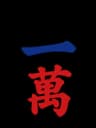
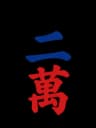
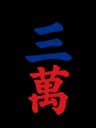


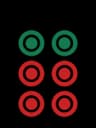
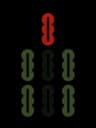

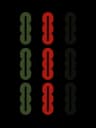
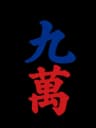
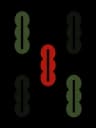
The four sets and the pair are all there, but winning on a discard gives no self-draw faan, so the hand is worth 2. Draw that 9 yourself and it's concealed hand 1 + self-draw 1 + no bonus tiles 1 = 3 faan: a legal self-draw win.
When this happens in Mahjong House, there's no Win button, and the top of the table says "Complete, only 2 faan: need 3 to win", so you know it's the minimum and not a bug.
Which faan add up
These are the usual ways to reach 3 faan. Each value matches the faan table, and they all add together:
- How you win: self-draw 1; concealed hand (no chow, pong or exposed kong) 1; win on a kong or flower replacement, robbing a kong, last tile of the wall and last discard 1 each.
- Flowers: no bonus tiles 1; your seat flower or season 1 each; a full set of four flowers or four seasons 2.
- Honour pongs: any dragon pong 1; a seat-wind or prevailing-wind pong 1 each.
- Patterns: all chows 1; all pongs 3; half flush 3; full flush 7.
So a concealed self-draw already has 2 faan, and no bonus tiles, a seat flower or one dragon pong takes it to 3. All pongs and half flush reach 3 on their own (see winning hands). What doesn't stack (a half flush and a full flush, for example) is under what adds up.
When a chicken hand can win, and when it can't
A chicken hand (雞糊, gai1 wu4) is a winning shape with no pattern at all: 0 faan from the hand itself. It can still win, as long as how you won and your flowers add up to the minimum.
Wins: concealed self-draw with no flowers, exactly 3 faan
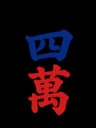
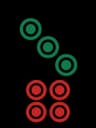

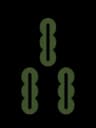

The pong of 3 bamboo means it isn't all chows; with no honours and no single suit, the pattern is worth 0. It's a chicken hand.
Can't win: the same hand, one condition short
- Won on a discard: no self-draw, so concealed hand 1 + no bonus tiles 1 = 2 faan.
- After ponging the 3 bamboo: no concealed hand, so self-draw 1 + no bonus tiles 1 = 2 faan.
- Holding one flower that isn't your seat's: no "no bonus tiles", so concealed hand 1 + self-draw 1 = 2 faan. If it's your seat flower, it's 3 again and wins.
In short, a chicken hand usually needs no claims and a self-draw, plus no flowers or a seat flower. For ways to reach 3 faan faster, see strategy.
1-faan, 3-faan and house rules
The minimum is a house rule, so tables differ. Mahjong House offers three settings:
| Minimum | What it means | Where |
|---|---|---|
| 3 faan (standard) | A hand needs at least 3 faan to win | Solo Practice default; always 3 in online Quick Match and Ranked |
| 1 faan | Any hand with 1 faan wins, e.g. a concealed hand on a discard | Solo Practice and Play with Friends |
| 0 faan | Any complete hand wins, even a chicken hand on a discard | Solo Practice and Play with Friends |
Whatever the minimum, seven pairs isn't a winning hand in Mahjong House's Hong Kong rules. The faan cap and every other setting are explained in house rules; the hands that score the cap outright are the limit hands.
How to change the minimum in Mahjong House
- On the home screen, choose Solo Practice, then Start a New Game.
- On the House Rules step, set Minimum Faan to 0, 1 or 3.
- With friends: in Play with Friends, choose Create a Room; the host picks the same Minimum Faan on the House Rules step.
Beginners can start at 1 faan and move up to the standard 3 once the scoring feels familiar. Online Quick Match and Ranked stay at 3, so everyone plays the same rules.
