

The main types at a glance
| Style | Played mostly in | Tiles | Hand | Minimum to win | Scoring | Signature rules |
|---|---|---|---|---|---|---|
| Hong Kong (Cantonese) | Hong Kong, Guangdong, Cantonese communities worldwide | 144 with flowers | 13 | Usually 3 faan | Faan on a doubling table, capped (often 10) | Discarder pays all; flowers score |
| Japanese (riichi) | Japan, online, riichi clubs worldwide | 136, no flowers; red fives common | 13 | One yaku | Han and fu, limit bands up to yakuman | Riichi, furiten, dora |
| Taiwanese | Taiwan | 144 with flowers | 16 | None | Base plus tai (底 + 台) | Dealer streak tai; five sets and a pair |
| Chinese Official (MCR, 國標) | Tournaments in China and Europe | 144 with flowers | 13 | 8 points (flowers don't count) | 81 scoring patterns, plus 8 from each player | No dealer repeat; 16 hands a game |
| American (NMJL) | United States | 152 with 8 jokers | 13 | A hand on the year's card | The value printed on the card | Card, Charleston, jokers, no chows |
| Sichuan (血戰到底) | Sichuan and southern China | 108, suits only | 13 | Varies | Doublings, low cap | No chows; one suit void; play on after a win |
| Singapore / Malaysia | Singapore, Malaysia | 144 plus animal tiles | 13 | Varies by group | Varies; close to Hong Kong | Animal tiles, instant payouts |
What all mahjong styles share
Under the differences, almost every style is the same game:
- Four players (three-player versions exist, especially in Japan, Korea and Malaysia), each drawing a tile and discarding one in turn.
- The core tiles: three suits numbered 1 to 9 (dots, bamboo and characters), four winds and three dragons, four of each. Styles add bonus tiles (flowers, seasons, animals), jokers, or take tiles away.
- Sets and a pair. A winning hand is built from runs (chows), three of a kind (pongs) and four of a kind (kongs), plus one pair: four sets in 13-tile styles, five in 16-tile ones.
- Claiming discards to complete a set, and winning on a discard or on your own draw.


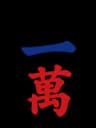
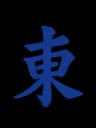
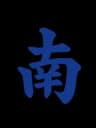
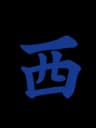

What changes from style to style is mostly the scoring: what a hand must contain to be allowed to win, how its value is counted, and who pays. That's what the rest of this page compares.
Hong Kong (Cantonese) mahjong
Hong Kong mahjong (港式麻雀, also 廣東牌 or Cantonese mahjong) is the everyday game of Hong Kong and of many Cantonese-speaking families abroad, and the style Mahjong House plays. It uses all 144 tiles, with flowers and seasons as bonus tiles, and a winning hand is four sets and a pair (or Thirteen Orphans).
- Faan scoring. Patterns earn faan (番): self-draw 1, a dragon pong 1, all pongs 3, half flush 3, full flush 7, and limit hands at the cap.
- A minimum. Most tables need 3 faan to win (三番起糊); a complete hand worth less, a chicken hand (雞糊), can't be declared.
- A doubling payout table. Faan become points on a table that roughly doubles as they rise, usually capped at 10 faan (十番滿糊).
- The discarder pays. On a discard win the discarder usually pays for all three players (全銃), so careless discards are expensive. Many clubs share it instead (半銃).
It's one of the quickest styles to learn: there's no card, no yaku list, no fu and no declarations. Start with How to play, then the rules, the faan table and the faan calculator. You can play it free in your browser.
Japanese (riichi) mahjong
Riichi mahjong (リーチ麻雀) is the standard Japanese game and, thanks to Japanese video games, anime and online platforms, one of the most widely played styles in the world. It's played in Japan, Korea and by a large international community, with standard rules published by the European Mahjong Association and the World Riichi Championship.
- 136 tiles, no flowers. Japanese sets often include red fives, which many games use as extra dora (usually one per suit).
- One yaku to win. A hand needs at least one scoring pattern; bonus tiles (dora) add han but don't count as yaku.
- Riichi: with a concealed ready hand you can bet 1,000 points and lock your hand for an extra han and a chance at ura-dora.
- Furiten: you can't win on a discard if your wait includes a tile you've discarded.
- Han and fu scoring with limit bands from mangan to yakuman; the dealer is paid 1.5 times; players start on 25,000 or 30,000 points, and placement bonuses (uma) settle the game.
Hong Kong vs riichi mahjong compares them rule by rule.
Taiwanese mahjong
Taiwanese mahjong (台灣麻將, 台灣牌) is the 16-tile game of Taiwan. It uses the full 144 tiles with flowers, but each player holds 16 tiles (the dealer 17), so a win is five sets and a pair.
- No minimum: any complete hand wins.
- Base plus tai. Every payment is a base (底) plus a fixed amount for each tai (台) in the hand, so scores grow in a straight line rather than doubling.
- Self-draw pays three times: all three opponents pay.
- The dealer's streak adds 2 tai for every hand they keep the deal (連莊、拉莊), on top of the dealer's own tai.
Hong Kong vs Taiwanese mahjong compares them in detail, including the tai and faan for each pattern.
Chinese Official mahjong (MCR, 國標麻將)
Mahjong Competition Rules (MCR), known in Chinese as 國標麻將 (national standard mahjong), were issued by China's national sports authority in 1998 and are the rules of the World Mahjong Organization and of Chinese-style tournaments; MCR is also one of the most played styles in Europe's mahjong clubs.
- 144 tiles; each flower is worth 1 point.
- 81 scoring patterns (fan), worth from 1 to 88 points, with rules about which can be combined.
- 8 points to win, and flowers don't count toward the 8. A plain hand with no other points, the Chicken Hand, is itself worth 8.
- Payment: every other player pays the winner 8 points, and the discarder also pays the hand's points; on a self-draw each player pays 8 plus the hand's points.
- No dealer repeats: a game is four rounds of four hands, 16 in all, and players change seats between rounds.
- Only one winner per discard: the player next in turn after the discarder.
Compared with Hong Kong, MCR rewards much more variety: mixed-suit runs (a 1-2-3 in each suit, for example), knitted hands, seven pairs and terminal patterns all score, and the 8-point bar forces a real pattern. Its fan and Hong Kong's faan are the same word (番), but the numbers aren't comparable.
American mahjong (NMJL)
American mahjong is governed by the National Mah Jongg League (NMJL), which publishes a new card of winning hands every year.
- 152 tiles: the 144 plus 8 jokers, which can stand in for a tile in a group of three or more.
- Only card hands win, and each hand's value is printed beside it.
- The Charleston: a set of tile passes between players before play starts.
- No chows, and flowers are part of the hand rather than bonus tiles; groups of five or six identical tiles are possible with jokers.
- Payment: the discarder pays double and the other two pay single; on a self-draw everyone pays double.
Hong Kong vs American mahjong explains what changes for NMJL players.
Other regional styles
Sichuan mahjong (血戰到底)
Sichuan mahjong (四川麻將, best known in its Chengdu form) uses only the 108 suit tiles: no winds, dragons or flowers. Chows aren't allowed, only pongs and kongs, and you must void one suit (缺一門) to win. In 血戰到底 ("fight to the bloody end") a win doesn't end the hand: the others play on until three players have won or the wall runs out. Values double per point up to a low cap, and kongs pay out on the spot ("wind and rain", 颳風下雨). It's quick and simple.
Singapore and Malaysian mahjong
Close relatives of Hong Kong mahjong, with a set of animal tiles (cat, mouse, rooster and centipede) added to the flowers and seasons. Animals are bonus tiles, and collecting a matching pair of them, like making a kong, can trigger an immediate payment in the middle of the hand. The scoring details vary by group.
Shanghai mahjong
A family of local styles from Shanghai and the surrounding area, known for slow, defensive play. Scoring is counted in "flowers" (花) up to an agreed limit (辣子), and many versions only allow certain kinds of winning hand, such as flushes and all pongs. Rules differ widely between groups.
Filipino mahjong
Usually played with 16-tile hands (five sets and a pair) from the 144-tile set, often with a shared pot (jai alai) and sometimes with a wild tile chosen for the game. House rules vary a lot.
Vietnamese mahjong
Played with sets that add jokers to the usual tiles, eight special jokers in a 160-tile set (some modern sets have more), together with extra flower tiles.
Three-player mahjong
Japan, Korea, Malaysia and the Philippines have popular three-player versions (in Japan, sanma) that remove all or part of one suit and speed the game up.
Mahjong solitaire is a different game
Many "mahjong" games online are actually mahjong solitaire (also called Shanghai solitaire): a one-player puzzle in which you match pairs of free tiles from a stacked layout until the board is clear. It uses mahjong tiles but has nothing to do with the rules above. It began as a computer game, created by Brodie Lockard in 1981 and popularised by Activision's *Shanghai* in 1986.
If you've only played the matching game, the real thing is a four-player game of building hands. Hong Kong mahjong is a good place to start: How to play explains it from scratch, and you can try it free against computer opponents in your browser.
Which type should you learn?
- You play with Cantonese-speaking family or friends: Hong Kong mahjong. It's what they'll be playing.
- You want the quickest start: Hong Kong mahjong or Sichuan. Both have short scoring lists.
- You want a deep, standardised competitive game with a big online scene: riichi, or MCR for Chinese-style tournaments.
- Your friends in Taiwan, or from Taiwan, play: Taiwanese 16-tile mahjong.
- You've joined an American mahjong group: the NMJL game and this year's card.
Learning one style makes the others much easier: the tiles, sets and claims carry over, and only the scoring needs to be relearned.
Detailed comparisons
- Hong Kong vs riichi mahjong: flowers or dora, 3 faan or one yaku, no riichi or furiten.
- Hong Kong vs Taiwanese mahjong: 13 tiles or 16, faan or tai, dealer streaks.
- Hong Kong vs American mahjong: no card, no jokers, no Charleston.
