

At a glance
| Hong Kong (廣東牌) | Taiwanese (台灣牌) | |
|---|---|---|
| Tiles | 144, with four flowers and four seasons | 144, the same (some tables, mostly in the south, play without flowers) |
| Hand | 13 tiles (dealer 14) | 16 tiles (dealer 17) |
| Winning hand | Four sets and a pair (14 tiles) | Five sets and a pair (17 tiles) |
| Minimum to win | 3 faan (三番起糊) | None: a hand with no tai still wins the base |
| Scoring unit | Faan, read off a payout table that doubles | Tai, paid at a fixed rate on top of a base (底 + 台) |
| Top of the scale | Capped at 10 faan | No cap as such; the biggest hands are 16 tai or more |
| Dealer | No bonus; deals again after a win or a draw | 1 tai, plus 2 more for each repeat (連莊、拉莊) |
| Discard win | The discarder pays three shares alone (全銃) | The discarder pays base + tai once |
| Self-draw | Each opponent pays one share | Each opponent pays base + tai, so about three times as much |
| Passing a win | No penalty (no 過水) | Usually 過水: no win until you've drawn again |
| End of the wall | Every tile is drawn | Often the last 8 stacks (16 tiles) are left; tables vary |
16 tiles: five sets and a pair
In Taiwanese mahjong each player holds 16 tiles and the dealer 17, so a winning hand is 17 tiles: five sets and a pair (五面一眼). Hong Kong mahjong deals 13 (dealer 14) and wins with four sets and a pair.

One extra set changes the feel. Taiwanese hands take longer to build and have more ways to come together, so complete hands of no particular pattern are common, and that's fine because any complete hand can win. In Hong Kong a complete hand that isn't worth 3 faan (a chicken hand, 雞糊) can't be declared at all under the standard rules.
The special hands differ too. Hong Kong keeps Thirteen Orphans (十三么) as a limit hand. The common Taiwanese tai lists don't include it; their special cases are the flower wins (below) and the early ready declarations 天聽 and 地聽.
Tai and faan: a base plus tai, or a doubling table
Before a Taiwanese game, the table agrees two amounts: the base (底) and the value of one tai (台). People name the stakes that way, "30/10" meaning a 30 base and 10 a tai. A winner collects the base plus their tai times the tai value:
- a 5-tai hand at 30/10 won on a discard: the discarder pays 30 + 5 × 10 = 80;
- the same 5 tai won by self-draw (the self-draw tai included): each of the three opponents pays 80, 240 in all;
- a hand with no tai at all still collects the base, 30.
Hong Kong adds up faan instead, needs at least 3 of them, and reads a payout table that grows by doubling. In the standard half-spicy (半辣上) table, 3 faan is 4 points per share, 6 faan 16 and 10 faan 64, and 10 faan is the cap. So the two games reward different things: in Hong Kong a big hand is worth many small ones, while in Taiwanese mahjong the base is a large part of every payment, so winning often, self-drawing and keeping the deal matter more than one big hand.
The payout table has every Hong Kong amount, including the spicy (辣辣上) table and 半銃.
Faan and tai, pattern by pattern
Many patterns exist in both games with similar values. The big differences are the dealer, waits and self-draw, which score in Taiwan and not (or less) in Hong Kong:
| Pattern | Hong Kong (faan) | Taiwanese (tai) |
|---|---|---|
| Dealer (莊家) | — | 1, plus 2 for each repeat |
| Self-draw (自摸) | 1 | 1 |
| Concealed hand (門清) | 1 | 1 |
| Concealed self-draw (門清自摸 / 不求) | 2 (1 + 1) | 3 |
| Single wait: edge, middle or pair (獨聽) | — | 1 |
| All claimed, waiting on one tile (全求) | — | 2 |
| Seat flower (正花) | 1 each | 1 each |
| Four flowers or four seasons (花槓 / 一台花) | 2 | 2 |
| No bonus tiles (無花) | 1 | — |
| Dragon pong | 1 | 1 |
| Seat wind / round wind pong | 1 each | 1 each |
| All chows (平糊 / 平胡) | 1 | 2, with stricter conditions |
| Three concealed pongs | — | 2 |
| All pongs (對對糊 / 碰碰胡) | 3 | 4 |
| Half flush (混一色) | 3 | 4 |
| Little three dragons (小三元) | 5 | 4 |
| Full flush (清一色) | 7 | 8 |
| Big three dragons (大三元) | 8 | 8 |
| Little four winds (小四喜) | 6 | 8 |
| Big four winds (大四喜) | Limit (10) | 16 |
| Last tile, kong replacement, robbing a kong | 1 each | 1 each |
| Heavenly hand (天糊 / 天胡) | Limit (10) | 24 or 32, by table |
Taiwanese 平胡 is much harder than Hong Kong 平糊. It typically needs no flowers, no honours, no pongs, a two-sided wait and a win on a discard (not self-draw), which is why it's worth 2 tai. Hong Kong's all chows is 1 faan: four chows, a pair that isn't a dragon or a scoring wind, and a two-sided wait.
The dealer: 連莊 and 拉莊
In both games the dealer deals again after winning or after a drawn hand, and the deal passes on when someone else wins. What it's worth is very different.
In Taiwanese mahjong the dealer is worth 1 tai in any hand they're involved in, whether they win or pay. Each time they keep the deal (連莊) another 2 tai go on top (one for the repeat, one more called 拉莊): one repeat makes the dealer's tai 3, two repeats 5, and so on. A dealer streak gets expensive for everyone, and stopping it is a big part of Taiwanese strategy.
A Hong Kong dealer gets nothing extra: no faan for dealing, no counters. A dealer streak just means the same seat winds again.
Flowers: the same tiles, slightly different scores
Both games use the four flowers (梅蘭菊竹) and four seasons (春夏秋冬), numbered 1 to 4 for East, South, West and North, and both set them aside and draw a replacement from the back of the wall (補花).
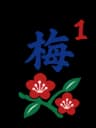
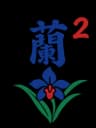
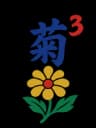
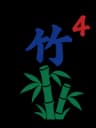
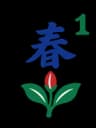
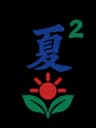
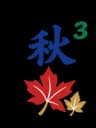
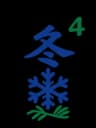
- Seat flower (正花): 1 faan in Hong Kong, 1 tai in Taiwan, for each bonus tile of your seat's number.
- A full set of four flowers or four seasons: 2 in both (花槓 in Taiwan, 一台花 in Hong Kong).
- No bonus tiles (無花): 1 faan in Hong Kong's standard rules. Taiwanese lists don't usually score it, although having no flowers is one of the conditions for 平胡.
- All eight (八仙過海): an instant win in both. Hong Kong scores it as a self-draw worth 8 faan; Taiwan as a self-draw worth 8 tai.
- Seven robs one (七搶一): in Taiwan, a player holding seven bonus tiles can take the eighth when someone else draws it, and wins 8 tai from that player. Mahjong House's Hong Kong rules don't use it (some Hong Kong tables play a similar 花糊).
Claiming, 過水 and several winners
Claims work the same way: anyone can pong, kong or win on a discard, only the next player can chow (上 in Hong Kong, 吃 in Taiwan), and a win beats a pong, which beats a chow.
- 過水. Many Taiwanese tables won't let you win on a discard after you've let a winning tile go by, until you've drawn and discarded again, and some apply it strictly (even a self-draw must wait). Mahjong House's Hong Kong rules don't use 過水: you can win on the next tile.
- Several winners on one discard. Mahjong House gives the win to the player next in turn after the discarder (截糊). Many Taiwanese tables do the same; others let every winner collect (一炮多響), so settle it before you play.
- The end of the wall. Taiwanese hands often end with 8 stacks (16 tiles) still in the wall, and some tables keep more back after each kong; Mahjong House plays every tile.
- Early ready declarations. Taiwanese tables often score 天聽 and 地聽, declaring a ready hand at the very start (and then not changing it). Hong Kong has no declarations.
Who pays
The biggest practical difference is self-draw. In Taiwanese mahjong a self-draw makes all three opponents pay base plus tai, about three times a discard win. In Hong Kong under 全銃, the discarder pays three shares alone, and on a self-draw each opponent pays one, so the winner collects the same total either way, plus the 1 faan for self-draw.
That changes how each game punishes a bad discard. In Hong Kong, feeding a winner costs you the whole hand. In Taiwan it costs you base plus tai, but a self-draw costs everyone, and the dealer pays their dealer tai on top whenever they're the one paying.
Many Hong Kong clubs play 半銃 instead, where the discarder pays two shares and the others one each. See the payout table.
How it feels to play
Taiwanese mahjong is a game of tempo and stamina: any hand can win, the base makes small wins worthwhile, and the dealer's growing tai make every streak a fight. With 16 tiles there are more waits to choose from, and single waits are rewarded.
Hong Kong mahjong is quicker and more about planning. Hands are smaller, but you have to reach 3 faan, so you decide early whether you're building a half flush, all pongs or honour pongs. Payouts double as faan rise, which makes the occasional big hand decisive and makes feeding one very costly. The strategy guide and defense guide go into both sides.
Coming from Taiwanese mahjong: what to change
- One set fewer. 13 tiles, four sets and a pair. Hands come together faster.
- Count to 3 faan. A plain complete hand can't win. Reliable routes: a half flush (3), all pongs (3), honour pongs, or concealed hand plus self-draw plus a seat flower.
- The dealer is worth nothing extra, so there's no streak to chase or stop.
- Waits don't score. Edge, middle and pair waits earn nothing; take the wait with the most tiles.
- Self-draw isn't triple money. Under 全銃 a discard win pays the same total, so take the discard when it comes.
- No 過水. Passing a win doesn't block the next one.
- Big hands pay more than you're used to, because faan double. A full flush (7 faan) pays 24 points a share at half-spicy, six times a 3-faan hand.
- Defend. The discarder pays everything, so late in a hand throw tiles that are already out.
Then try it: How to play walks through a first game, the rules guide has every detail, and the Daily Puzzle is one Hong Kong hand a day.
Going the other way
If you play Hong Kong mahjong and sit down at a Taiwanese table: take 16 tiles and build five sets, agree the base, the tai value and the tai list first, and stop worrying about the minimum, because any complete hand wins. Watch the dealer: their streak adds 2 tai a time to whatever you pay them. And expect most hands to be small; the base, self-draws and the dealer's tai are where the points come from.
Other styles
Types of mahjong compares the main styles in one table. See also Hong Kong vs riichi mahjong (Japanese rules: riichi, furiten and dora) and Hong Kong vs American mahjong (the NMJL card and jokers).
