

At a glance
| Hong Kong mahjong | Riichi mahjong | |
|---|---|---|
| Tiles | 144, with four flowers and four seasons | 136: no flowers; red fives are common in Japan |
| Bonus tiles | Flowers and seasons, scored as faan | Dora, ura-dora, kan dora (and red fives): extra han |
| Minimum to win | 3 faan (三番起糊); flowers count toward it | At least one yaku; dora don't count as yaku |
| Scoring | Faan, read off a payout table that doubles | Han and fu turned into points, with limit bands |
| Top of the scale | 10 faan; limit hands score the full 10 | Mangan up to yakuman (13 han is often a counted yakuman) |
| Ready declaration | None; you can sit ready silently | Riichi: 1,000-point bet, concealed hand locked |
| Furiten | No: you can win on any tile, even your own discard | Yes: no ron on a tile you've discarded or passed |
| Seven pairs | Not a hand | Chiitoitsu, 2 han |
| Discard win | The discarder pays alone (全銃) | The discarder pays alone (ron) |
| Dealer | No bonus; deals again after a win or any draw | Paid 1.5×; deals again after a win or tenpai at a draw |
| Exhaustive draw | Nothing is paid | Noten players pay tenpai players 3,000 in total |
| Game | Four rounds, East to North (Mahjong House online: four hands) | Usually East and South rounds, from 25,000 or 30,000 points |
The tiles: flowers instead of dora
Both games use the same 34 kinds of tile, four of each: dots, bamboo and characters from 1 to 9, the four winds and the three dragons. That's the whole 136-tile riichi set. A Hong Kong set adds eight bonus tiles, four flowers and four seasons, for 144.
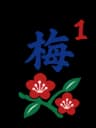
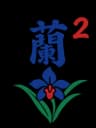
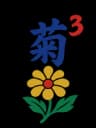
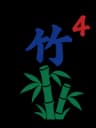
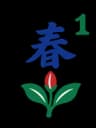
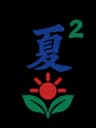
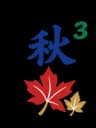
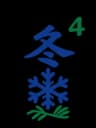
A Hong Kong bonus tile is never part of your hand: you set it aside face up and draw a replacement from the back of the wall. It scores at the end, 1 faan if its number matches your seat, 2 faan for a full set of four, and in the standard rules 1 faan for winning with none at all. Unlike dora, flower faan count toward the minimum: concealed hand, self-draw and no bonus tiles is already 3 faan.
Riichi's bonus tiles are dora, shown by an indicator on the dead wall (plus kan dora after a kong and ura-dora for a riichi winner). Each dora is a han, but dora are not yaku: a hand with only dora can't win. Mahjong House's Hong Kong rules have no dead wall; every tile can be drawn.
What wins: 3 faan, not one yaku
The shape is the same: four sets and a pair, where a set is a chow (a run of three in one suit), a pong or a kong. Both games also allow Thirteen Orphans. Riichi has a second special shape, Seven Pairs (chiitoitsu, 2 han); Mahjong House's Hong Kong rules don't allow seven pairs (a few tables do).


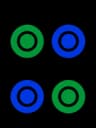
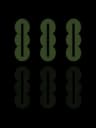
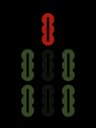

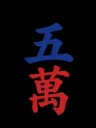
The real difference is the minimum. Riichi asks for at least one yaku and nothing more: a cheap 1-han hand wins if it has that yaku. Hong Kong asks for 3 faan, and a complete hand worth less (a chicken hand, 雞糊) can't be declared under the standard rules. Part of the skill is steering toward 3 faan from the first discard.
The faan table lists every Hong Kong hand, and the faan calculator scores any hand you tap in.
No riichi, no furiten
Hong Kong mahjong has no ready declaration. Nobody bets 1,000 points, nobody locks their hand, and there's no ippatsu or ura-dora. A concealed hand is still rewarded: Concealed hand (門前清) is 1 faan, even if you win on a discard, and self-draw adds another.
There's also no furiten. In riichi you can't call ron on a tile you've discarded yourself, or on any discard after passing a winning tile until your next draw (permanently, once you've declared riichi). In Hong Kong you may win on any tile, including one you threw earlier, and passing on one win never stops you taking the next. Some Hong Kong tables play a rule called 過水 that resembles temporary furiten; Mahjong House's standard rules don't.
This changes defense most. You read readiness from exposed sets, timing and discards, and with no furiten a player's own discards (genbutsu) are good evidence but not a guarantee, and suji is weak. The defense guide covers what carries over from riichi.
Scoring: faan and a payout table, not han and fu
Riichi scoring has two parts. Han come from yaku and dora; fu (minipoints) come from the hand's sets, wait and how it won. Below 5 han the two combine into a base value; from mangan (5 han, and some 3- and 4-han hands with enough fu) the hand is paid by band: haneman (6–7 han), baiman (8–10), sanbaiman (11–12) and yakuman. In most Japanese rules 13 han or more counts as a yakuman (kazoe yakuman); the EMA rules stop at sanbaiman.
Hong Kong has no fu. You add up the hand's faan, cap them at 10, and read a payout table. In the standard half-spicy (半辣上) table, 3 faan is 4 points per share, 6 faan is 16 and 10 faan is 64: the value roughly doubles every faan or two, so big hands are worth chasing. Limit hands such as Thirteen Orphans go straight to the cap.
Similar patterns score quite differently:
| Pattern | Hong Kong | Riichi |
|---|---|---|
| Self-draw | 1 faan, open or concealed | Menzen tsumo, 1 han, concealed only |
| Concealed hand | 1 faan, even on a discard | No yaku by itself (riichi and tsumo need it) |
| Dragon pong | 1 faan | 1 han (yakuhai) |
| Seat or round wind pong | 1 faan each | 1 han each |
| All chows | 1 faan (平糊), two-sided wait | Pinfu, 1 han, concealed only |
| All simples (2–8 only) | Not scored | Tanyao, 1 han (open allowed in most rules) |
| All pongs | 3 faan | Toitoi, 2 han |
| Half flush | 3 faan | Honitsu, 3 han (2 if open) |
| Full flush | 7 faan | Chinitsu, 6 han (5 if open) |
| Little three dragons | 5 faan | Shousangen, 2 han plus 2 for the dragon pongs |
| Big three dragons | 8 faan | Yakuman |
| Little four winds | 6 faan | Yakuman |
| Seven pairs | Not a hand | 2 han |
| Thirteen orphans | Limit (10 faan) | Yakuman |
On the Hong Kong side all simples, sequence patterns (sanshoku, ittsu) and dora don't score: Hong Kong faan come from honour pongs, flushes and all pongs.
Open hands lose less in Hong Kong
In riichi, calling a tile has a cost built into the yaku list. Riichi, menzen tsumo, pinfu and iipeikou need a concealed hand, and several yaku lose a han when the hand is open (kuisagari): half flush, full flush, mixed triple sequence, pure straight and the outside hands. Whether open all simples (kuitan) counts depends on the rules: most allow it, some play kuitan nashi.
In Hong Kong an open hand only loses the 1 faan for Concealed hand. A half flush is 3 faan and all pongs 3 faan however the sets were made, which is why Hong Kong players claim more freely.
Claiming discards
Claims are the same in both games: anyone can pong, kong or win on a discard, only the next player can chow, and a win beats a pong or kong, which beats a chow. Robbing a kong works the same way too, and in both a concealed kong can be robbed only for Thirteen Orphans.
One winner per discard in Mahjong House's standard rules: if two players can win on the same tile, the one next in turn after the discarder takes it (截糊). Riichi rule sets differ here; the EMA rules let every player who can win on the discard do so. The rules guide has the details.
Who pays
On a discard win the two games agree: the discarder pays the whole hand. In Hong Kong that's three shares from the discarder alone (全銃).
On a self-draw they differ. In riichi the three opponents split the value, with the dealer paying a double share. In Hong Kong each opponent pays one share, so under 全銃 a self-drawn hand collects the same total as the same hand won on a discard, plus the faan for self-draw.
- No honba or riichi sticks. Riichi adds 300 points per counter after a dealer repeat or draw, and the winner collects any riichi bets; Hong Kong has neither.
- No tenpai payments. When a riichi hand runs out of tiles, players who aren't ready pay those who are, 3,000 points in total. In Hong Kong a drawn hand (流局) costs nobody anything.
- No dealer premium. Riichi's dealer collects 1.5 times as much for a win and pays a double share when someone else self-draws. A Hong Kong dealer scores like everyone else.
- Liability is similar. Both games make the player who feeds the last dragon set for Big three dragons, or the last wind set for Big four winds, liable for the hand (包 in Hong Kong, pao in riichi).
Many Hong Kong clubs play 半銃 instead, where the discarder pays two shares and the others one each. The payout table shows every option.
Dealer, rounds and the end of the game
In both games the dealer is East and deals again after winning. After an exhaustive draw, riichi's dealer stays only if their hand was tenpai; a Hong Kong dealer stays after any drawn hand. When someone else wins, the deal passes to the next seat in both.
A riichi game is usually a hanchan (East and South rounds), starting on 25,000 or 30,000 points, with placement bonuses (uma, often with oka) that vary by club, league and platform. A Hong Kong game is traditionally the full four rounds, East to North; in Mahjong House you choose the length in solo practice, and online matches are four hands.
How it feels to play
Riichi is a game of concealed hands and information: declarations tell you who is ready, furiten turns the discards into a map of safe tiles, and pushing or folding against a riichi is the heart of the game.
Hong Kong mahjong is faster and more open. You claim more, hands are built around honours and flushes, and nothing warns you, so you watch exposed sets: two dragon pongs or a run of one suit on the table means danger. See the strategy guide for reaching 3 faan quickly.
Coming from riichi: what to change
- Count to 3 faan, not one yaku. A dragon pong alone isn't enough. Typical routes: a dragon pong plus a half flush (4), all pongs (3), or concealed hand plus self-draw plus a seat flower.
- Forget tanyao and pinfu-style hands. All simples doesn't score, and a closed all-sequence hand is worth 1 faan for all chows plus 1 for concealed.
- Flushes and honour pongs are the money. Half flush is 3 faan, the whole minimum, and you keep it when you call.
- Call more. Opening costs only the 1-faan concealed bonus, so pong your dragons and seat wind.
- There is no riichi. Stay quiet when you're ready: you can still change your wait, and nobody is warned.
- Your own discards aren't dead to you. With no furiten you can wait on a tile you threw, and opponents can win on tiles they discarded.
- Flowers are free faan, and holding none is worth 1 too.
- Mind the discard. The discarder pays everything, and there's no tenpai payment to salvage a drawn hand.
Then try it: How to play walks through a first hand, and the Daily Puzzle is one Hong Kong hand a day to practise counting faan.
Going the other way
If you play Hong Kong mahjong and want to try riichi: put the flowers away, learn the yaku list (most hands need riichi, tanyao, pinfu or a yakuhai pong), and learn furiten before your first game, because a hand that is complete in Hong Kong may be unable to win on that tile in riichi. Expect to call less: an open hand gives up riichi, menzen tsumo and pinfu.
Other styles
Types of mahjong compares all the main styles in one table. If you also play other variants, see Hong Kong vs Taiwanese mahjong (16-tile hands and 台 scoring) and Hong Kong vs American mahjong (the NMJL card and jokers).
