

The goal: four sets and a pair
Each player holds 13 tiles. On your turn you draw a tile and then discard one, so your hand keeps changing one tile at a time. You win, or 食糊 (sik6 wu4, "eat the hand"), when your 14 tiles form four sets and one pair and the hand is worth at least 3 faan (番), the scoring units of Hong Kong mahjong.



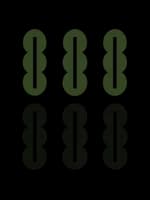
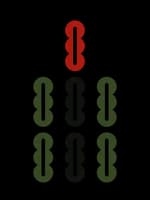

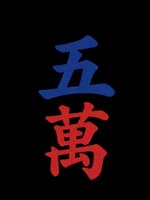
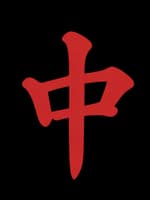
There are three kinds of set:
- Chow (上, soeng5): three tiles in a row in one suit, such as 3-4-5 of Bamboo. Winds and dragons can't make chows.
- Pong (碰, pung3): three identical tiles, such as three Red Dragons.
- Kong (槓, gong3): four identical tiles. A kong counts as one set; because it uses an extra tile, you draw a replacement tile straight away.
The pair (眼, ngaan5, "the eyes") is two identical tiles. One special hand breaks the pattern: Thirteen Orphans (十三么), one of every 1, 9, wind and dragon plus a second of any of them. It's a limit hand, the most valuable kind (see the faan table).
Meet the tiles
A Hong Kong set has 144 tiles:
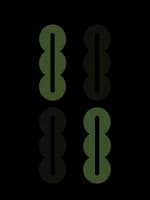
- Three suits, numbered 1 to 9, four of each tile: Dots (筒), Bamboo (索) and Characters (萬). That's 108 tiles.
- Honours, four of each: the four Winds (East, South, West, North) and the three Dragons (Red 中, Green 發, White 白). That's 28 tiles.
- Bonus tiles, one of each: four Flowers and four Seasons, numbered 1 to 4. They never go into your hand, but they can earn faan.

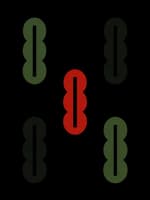
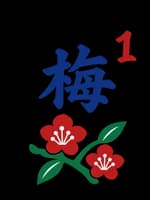
Two words you'll meet in scoring: terminals are the 1s and 9s of each suit, and honours are the winds and dragons. The tile guide shows every tile with its name.
Seats, the dealer and the deal
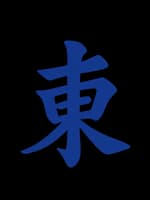
The four seats are named after the winds: East, South, West and North. East is the dealer (莊家), and play passes counter-clockwise: East, then South, then West, then North. Your seat's wind is your seat wind (門風); each round also has a prevailing wind (圈風), starting with East. Both matter for scoring.
The tiles are shuffled face down and built into a square wall. The dealer rolls three dice to decide where the wall is opened, and everyone takes tiles in turn until each player has 13; the dealer takes a 14th and starts the game by discarding.
Flowers and seasons: if you're dealt a bonus tile, you put it face up beside your hand and draw a replacement from the far end of the wall (補花). The same happens whenever you draw one during play. If you win on that replacement tile, it's worth an extra faan.
A turn: draw, then discard
- Draw a tile from the wall (skip this if you've just claimed a discard).
- If your 14 tiles now win with at least 3 faan, you may declare self-draw (自摸). Everyone pays you.
- If you hold four of a kind, you may declare a kong and draw a replacement tile.
- Otherwise, discard one tile face up into the middle of the table.
After you discard, the other three players each get a moment to claim your tile. If nobody does, the next player draws, and so on around the table. After discarding you always hold 13 tiles, plus one extra for each kong.
Claiming a discard: win, pong, kong and chow
Any discard can be claimed to finish a set. You take the tile, lay the finished set face up (it's now exposed) and discard. Play then continues from you, skipping anyone in between.
- Win (食糊) with it, if it completes your hand with enough faan. A win beats every other claim.
- Pong (碰) it, if you hold two of the same tile.
- Kong (槓) it, if you hold three of the same tile. You draw a replacement tile before discarding.
- Chow (上) it, if you're the next player after the discarder and you hold two tiles that make a run with it.
When more than one player wants the same tile, a win beats a pong or kong, and a pong or kong beats a chow. If two players can win on the same discard, the one next in turn after the discarder takes it; some home tables let both win instead.
Faan and the 3-faan minimum
Hong Kong mahjong is scored in faan, and a hand needs at least 3 faan to win. A complete hand worth less simply can't be declared (Mahjong House tells you it's complete but under 3 faan). Faan come from four places:
| Where faan come from | Examples | Faan |
|---|---|---|
| How you won | Self-draw · Concealed hand (no claimed sets) | 1 each |
| Bonus tiles | Your seat's flower or season · No bonus tiles at all | 1 each |
| Honour pongs | Any dragon pong · Your seat wind · The round's wind | 1 each |
| Hand pattern | All chows 1 · All pongs 3 · Half flush 3 · Full flush 7 | 1 to 7 |
Faan add up, to a cap of 10 faan. A handful of rare limit hands, such as Thirteen Orphans or Big Four Winds, score the full 10 on their own. The scoring guide covers every hand and how faan turn into points.
Building your first winning hand
The hard part for beginners isn't completing a hand, it's completing one worth 3 faan. Pick a route early and keep the tiles that serve it:
- One suit plus honours. A half flush (混一色) is 3 faan on its own: keep one suit, winds and dragons, and throw the other two suits.
- Dragons. Each dragon pong is 1 faan. Keep dragon pairs and pong them when they're discarded; two dragon pongs and a pair of the third is Little Three Dragons, 5 faan.
- All pongs. 對對糊 is 3 faan. Collect pairs and pong as many as you can.
- Stay concealed. A hand you never claim into, won by self-draw with no bonus tiles, scores Concealed hand + Self-draw + No bonus tiles = 3 faan, even with no pattern at all: the famous chicken hand (雞糊).

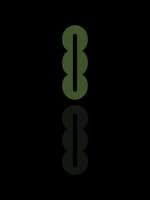
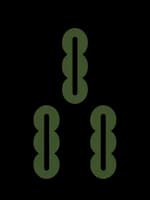
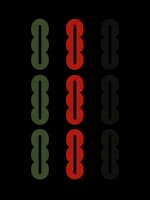
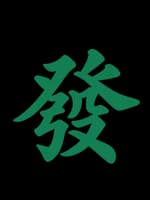
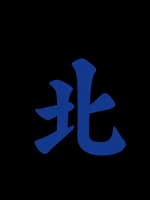
Discarding well. Early in the hand, let go of lone winds that aren't yours, lone terminals and tiles of the suits you're not keeping. Later, watch what the others have exposed and thrown: a player with three exposed sets of Bamboo wants Bamboo, so don't feed it to them. In Mahjong House's standard rules the player who discards the winning tile pays for the whole table, so a safe discard can matter more than a quick hand.
How a hand is paid
The winner's faan set the payout from a fixed table. On a self-draw, all three opponents pay. On a discard win, only the discarder pays, three times as much (全銃, the rule online in Mahjong House). Many clubs play 半銃 instead, where the discarder pays double and the other two pay a single share; Mahjong House offers it as a house rule in solo play.
In Mahjong House every score is counted in jade (玉), a points unit with no cash value. The scoring guide has the full points table.
Practise, then play real people
The quickest way to learn is to play. Mahjong House's Learn to Play has five short lessons and a guided practice hand, and the Relaxed opponents forgive mistakes while you find your feet. When you're ready, try Quick Match online: four hands against real players under the standard rules.
Keep the rules reference, the faan table and the glossary open while you play.