

The 144 tiles at a glance
| Group | Tiles | Copies | Total |
|---|---|---|---|
| Dots (筒子) | 1 to 9 | 4 of each | 36 |
| Bamboo (索子) | 1 to 9 | 4 of each | 36 |
| Characters (萬子) | 1 to 9 | 4 of each | 36 |
| Winds (風牌) | East, South, West, North | 4 of each | 16 |
| Dragons (三元牌) | Red, Green, White | 4 of each | 12 |
| Flowers (花) | Plum, Orchid, Chrysanthemum, Bamboo | 1 of each | 4 |
| Seasons (季) | Spring, Summer, Autumn, Winter | 1 of each | 4 |
Dots (筒子, tung4 zi2)
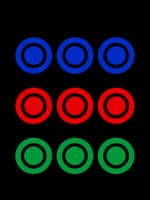
Also called circles or coins. Each tile shows its number as coloured circles, so the Five of Dots has five. Count the circles and you can read any Dots tile.
- One of Dots一筒
- Two of Dots二筒
- Three of Dots三筒
- Four of Dots四筒
- Five of Dots五筒
- Six of Dots六筒
- Seven of Dots七筒
- Eight of Dots八筒
- Nine of Dots九筒








Bamboo (索子, sok3 zi2)
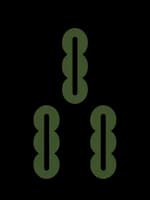
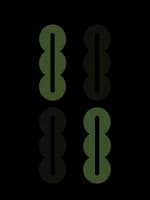
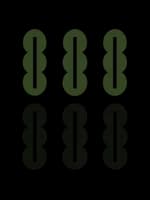
Also called sticks. Each tile shows its number as bamboo sticks, except the One of Bamboo, which is traditionally a bird (幺雞, jiu1 gai1, "the little chicken") rather than a single stick. New players often mistake it for a bonus tile: it's an ordinary 1.
- One of Bamboo一索
- Two of Bamboo二索
- Three of Bamboo三索
- Four of Bamboo四索
- Five of Bamboo五索
- Six of Bamboo六索
- Seven of Bamboo七索
- Eight of Bamboo八索
- Nine of Bamboo九索






Characters (萬子, maan6 zi2)
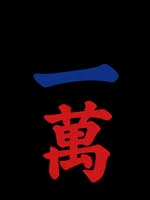
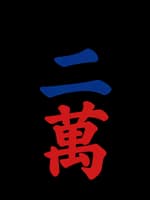
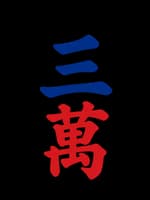
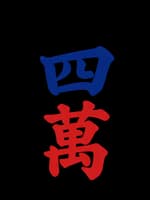
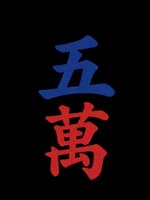
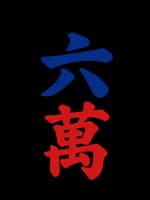
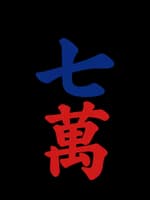
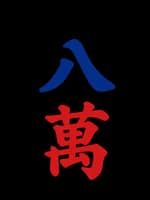
Also called cracks or myriads. Each tile has a Chinese numeral, 一 (1) to 九 (9), above the character 萬 ("ten thousand"). If you don't read Chinese, learn the nine numerals; Mahjong House's English tile style adds a large number in the corner.
- One of Characters一萬
- Two of Characters二萬
- Three of Characters三萬
- Four of Characters四萬
- Five of Characters五萬
- Six of Characters六萬
- Seven of Characters七萬
- Eight of Characters八萬
- Nine of Characters九萬
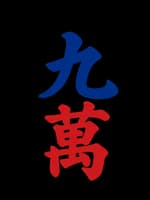
Reading the Chinese numerals
The Characters suit is the only one you have to read rather than count. These are the nine numerals, with their Cantonese pronunciation:
| Numeral | Number | Jyutping | Tip |
|---|---|---|---|
| 一 | 1 | jat1 | One stroke |
| 二 | 2 | ji6 | Two strokes |
| 三 | 3 | saam1 | Three strokes |
| 四 | 4 | sei3 | A box with two legs inside |
| 五 | 5 | ng5 | Looks like a squared-off 5 on its side |
| 六 | 6 | luk6 | A dot on a roof, two legs below |
| 七 | 7 | cat1 | A cross with a hooked tail |
| 八 | 8 | baat3 | Two strokes spreading apart |
| 九 | 9 | gau2 | A hooked stroke crossing another |
Winds (風牌)
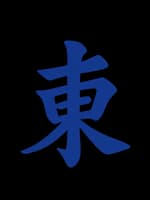
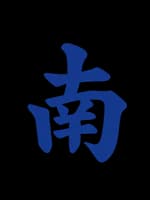
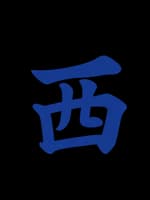
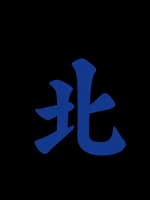
Four winds, four of each: East 東 (dung1), South 南 (naam4), West 西 (sai1) and North 北 (bak1). A pong of your own seat wind or of the round's prevailing wind is worth 1 faan; three wind pongs and a wind pair is Little Four Winds (6 faan), and all four is the Big Four Winds limit hand.
- East Wind東風
- South Wind南風
- West Wind西風
- North Wind北風
Dragons (三元牌)
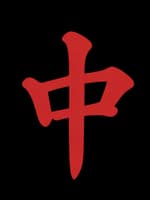
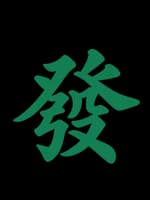
Three dragons, four of each: Red 紅中 (hung4 zung1), Green 發財 (faat3 coi4, "get rich") and White 白板 (baak6 baan2, "blank board"), usually drawn as an empty blue frame. Every dragon pong is worth 1 faan to anyone, which makes dragons the most useful honour tiles for beginners.
- Red Dragon紅中
- Green Dragon發財
- White Dragon白板

Flowers and seasons (花 and 季)
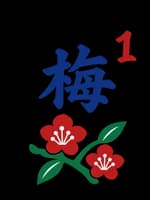
One of each, numbered 1 to 4. The flowers are Plum 梅, Orchid 蘭, Chrysanthemum 菊 and Bamboo 竹; the seasons are Spring 春, Summer 夏, Autumn 秋 and Winter 冬. They're never part of a hand: when you get one, you lay it face up and draw a replacement from the back of the wall.
- Flower 1: Plum花 1:梅
- Flower 2: Orchid花 2:蘭
- Flower 3: Chrysanthemum花 3:菊
- Flower 4: Bamboo花 4:竹
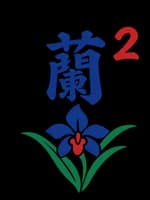
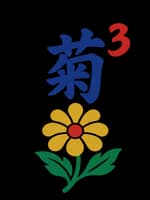
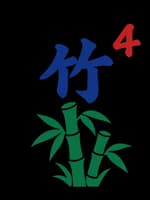
- Season 1: Spring季 1:春
- Season 2: Summer季 2:夏
- Season 3: Autumn季 3:秋
- Season 4: Winter季 4:冬
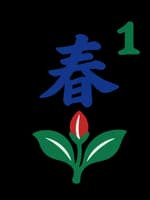
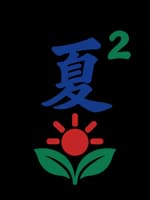
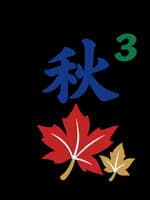
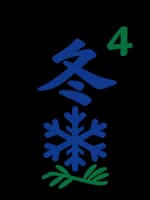
Each number belongs to a seat: 1 East, 2 South, 3 West, 4 North. Your own flower and season (正花) are 1 faan each, a full set of four flowers or four seasons is 2 faan, and winning with none at all is 1 faan. Collect all eight and you win on the spot. The faan table has the details.
Simples, terminals and honours
Scoring sorts the playing tiles into three families:
- Simples: the 2s to 8s of each suit. They make the most chows.
- Terminals (么, jiu1): the 1s and 9s. They anchor Mixed terminals (4 faan), Pure terminals and Thirteen orphans.
- Honours (字牌, zi6 paai2): winds and dragons. They can't make chows, but their pongs score.
Counting tiles: why four of each matters
Every playing tile exists exactly four times, and that's the most useful fact at the table. Before you wait on a tile, count how many are already visible in the discards and in exposed sets. If three of the 7 of Dots are showing, only one is left for you to win on; if all four are out, your wait is dead and you should change it.
The same counting keeps you safe. A tile that has already been discarded twice is less likely to complete someone's hand than one nobody has thrown, and a wind or dragon with three showing can only finish a pair. In practice games Mahjong House can show the tiles you're waiting on and how many of each are still unseen (Settings → Show What I'm Waiting For), which is a good way to build the habit.
Tile styles in Mahjong House
Mahjong House has three tile faces, switchable in Settings: Classic Hong Kong faces (the ones on this page), English, with large corner indexes, and a clean Modern set. The rules and scoring are the same whichever you choose. Ready to see them on the table? Read How to play, then deal a hand.