

How many faan is thirteen orphans?
Thirteen orphans (十三么) is a limit hand: it scores the full 10-faan cap (13 with a 13-faan cap), and self-draw, a concealed hand and flowers aren't added. It must be concealed, and can be won by self-draw or on a discard; a player waiting on it can even rob a concealed kong.











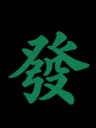

How many faan is big three dragons?
8 faan, including the three dragon pongs. It isn't a limit hand in Mahjong House's standard rules, but with all pongs, or a concealed hand and self-draw, it reaches the 10-faan cap. If a player has two dragon pongs showing, whoever discards the tile for their third pays for everyone.
How many faan is little three dragons?
5 faan: pongs of two dragons and a pair of the third. The 5 includes those two dragon pongs; other honour pongs still add, so with your seat wind pong it's 6.
How many faan are big and little four winds?
Big four winds (pongs or kongs of all four winds) is a limit hand: the full 10 faan. Little four winds (pongs of three winds and a pair of the fourth) is 6, with no seat or round wind faan for those three. Discarding the tile that gives a player with three wind pongs their fourth makes you pay for everyone.
How many faan is all pongs?
3 faan: four pongs or kongs and a pair. The pongs can be claimed, and the pattern alone reaches the 3-faan minimum. If you drew all four yourself it's four concealed pongs, a limit hand.
How many faan are full flush and half flush?
Full flush 7 (one suit, no honours); half flush 3 (one suit plus winds or dragons). They never count together. Full flush with all pongs is 7 + 3 = 10, the cap; half flush with all pongs is 6. See winning hands.
How many faan is all chows?
1 faan. In Mahjong House's standard rules it needs four chows, a pair that isn't a dragon, your seat wind or the round wind, and a win on a two-sided wait: a pair, middle or edge wait doesn't count. See winning hands.
How many faan is a concealed hand?
1 faan: no chow, pong or exposed kong, so every set came from your own draws. Winning on a discard still counts; in the standard rules a concealed kong ends it. A concealed hand won by self-draw is at least 2.
How many faan is self-draw, and who pays?
Self-draw is 1 faan, and all three opponents pay one share each. On a discard the discarder pays (in the standard rules, all three shares alone). See the payout table.
How many faan is winning on a kong replacement?
Winning on the tile drawn after a kong (槓上開花) is 1 faan, plus 1 for self-draw: 2 together. Winning on a flower's replacement tile is the same, 2 with self-draw.
How many faan is winning on the last tile?
A self-draw on the very last tile of the wall (海底撈月) is 1 faan, plus self-draw: 2. Winning on the last discard (海底炮) is 1.
How do seat flowers score?
Flowers and seasons are numbered 1 to 4, for East, South, West and North. Each one matching your seat is 1 faan (your flower and your season count separately); all four flowers or all four seasons is a set worth 2 (including its seat tile); and winning with no bonus tiles is 1. See the tiles.
How many faan is collecting all eight flowers?
Collecting all eight flowers and seasons wins at once, scored as a self-draw: exactly 8 faan, with nothing added.
How many faan is robbing the kong, and who pays?
When a player adds a tile to an exposed pong to make a kong, winning on that tile is robbing the kong: 1 faan. The player making the kong pays as the discarder, and their set goes back to a pong. A concealed kong can't be robbed, except by a player waiting on thirteen orphans. See claim priority.
What happens when nobody wins (a draw)?
If the wall runs out with no winner, the hand is a draw (荒莊): nobody pays, and the dealer deals again. Running out of tiles to replace a kong or a flower is also a draw. Being ready to win doesn't change that: nobody pays.
When does the dealer stay dealer?
When the dealer wins or the hand is a draw, the dealer deals again. When another player wins, the next seat becomes dealer and everyone's seat wind moves on one. After the deal has gone round all four seats, the round wind changes.
How many rounds are in a game of Hong Kong mahjong?
Traditionally four: the East, South, West and North rounds, each at least four hands (the deal going round all four seats). Mahjong House's Solo Practice offers four rounds, eight hands, sixteen hands or until someone goes bust; online matches are four hands.
What is paying for everyone (包牌)?
If your discard directly completes certain limit hands, you pay the winner's whole amount alone, even if they then self-draw. Mahjong House applies it in three cases: a player with two dragon pongs showing claims your third dragon (big three dragons); a player with three wind pongs showing makes their fourth with your tile (big four winds); your discard gives a player their fourth kong (four kongs).
What if two players can win on the same tile?
In Mahjong House's standard rules (截糊) the first player after the discarder in turn order wins. With the multiple winners house rule (一炮多響), everyone who calls the win wins, and the discarder pays each. Solo Practice and Play with Friends can turn that on. See claim priority.
If I pass on a winning tile, can I still win later?
In Mahjong House, yes: it doesn't play 過水, the house rule some tables use where passing a win stops you winning on discards until you've drawn again. You can still win on the next tile, including the same tile discarded again.
What's the penalty for a false win?
Mahjong House only allows valid wins, so a false win (詐糊) can't happen in the game. At a real table it's punished heavily, usually by paying as if all three opponents had won a limit hand; agree it before you play.
What's the difference between half-spicy and spicy scoring?
Both turn faan into points. Half-spicy (半辣上, Mahjong House's standard) doubles every two faan: 3 faan is 4 points, 6 faan 16 and 10 faan 64. Spicy (辣辣上) doubles every faan from 4: 3 to 10 faan are 4, 8, 16, 32, 64, 128, 256 and 512. Points have no money value. See the payout table.
