

What a limit hand is
Hong Kong mahjong caps a hand's faan, at 10 in the standard rules. A hand that reaches the cap is a limit (爆棚); some hands are worth the cap by themselves, and those are the limit hands.
- A limit hand scores the cap and nothing else: self-draw, a concealed hand, flowers and honour pongs aren't added, and it never goes over the cap.
- An ordinary hand can reach the limit too: a full flush (7) with all pongs (3) is exactly 10, and anything over 10 still counts as 10.
- The 3-faan minimum still applies, but a limit hand always clears it.
Every limit hand is also listed in the faan table. These nine are all the limit hands in Mahjong House's standard rules.
Thirteen orphans (十三么)
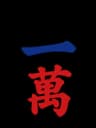
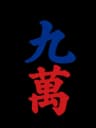

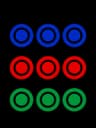

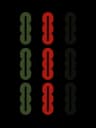
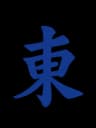
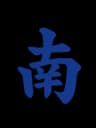
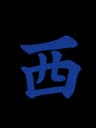
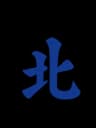
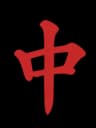
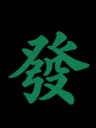
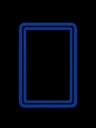
Thirteen orphans is the only winning hand that isn't four sets and a pair: one each of the 1 and 9 of the three suits, the four winds and the three dragons, plus one more of any of them as the pair.
- It must be concealed, since every tile is single: no chow, pong or kong.
- It can be won by self-draw or on a discard.
- A player waiting on thirteen orphans can rob a concealed kong of the tile they need. Every other hand can rob only an added kong (see the rules).
The other limit hands
Nine gates (九蓮寶燈)
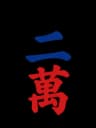
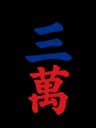
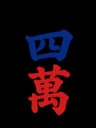
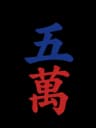
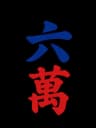
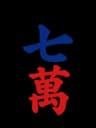
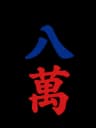
One suit only, built on 1-1-1-2-3-4-5-6-7-8-9-9-9, plus any other tile of that suit. It must be concealed: no chow, pong or kong.
Big four winds (大四喜)

Pongs or kongs of east, south, west and north. Ponging is allowed. If you discard the tile that gives a player with three wind pongs showing their fourth, you pay for everyone (see responsibility).
All honours (字一色)
Winds and dragons only, no suit tiles at all. It's already a limit, so all pongs and mixed terminals aren't added.
Pure terminals (清么九)
Only the 1s and 9s of the suits, in pongs (or kongs) and a pair, with no honours. Add an honour and it's mixed terminals (4 faan), not a limit.
Four concealed pongs (坎坎糊)
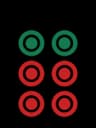


Four pongs (or concealed kongs), all drawn yourself. Win by self-draw, or on a discard only for the pair: a pong made with someone else's tile isn't concealed.
Four kongs (十八羅漢)
Four kongs of any kind (exposed, concealed or added) and a pair: eighteen tiles, hence the Chinese name, "eighteen arhats". Discarding the tile for someone's fourth kong makes you pay for everyone.
Heavenly and earthly hands (天糊, 地糊)
Heavenly hand: the dealer's first 14 tiles, after flowers are replaced, already win. Earthly hand: a non-dealer wins on the dealer's first discard, before anyone has claimed a tile. Both are about timing, not the shape of the hand.
How a limit hand is paid
A limit is paid at the cap. Under the standard 10-faan cap and half-spicy table, one unit at 10 faan is 64 points:
| How you win | Who pays | Winner receives |
|---|---|---|
| Self-draw | 64 from each of the three others | 192 |
| On a discard (全銃, standard) | 192 from the discarder alone | 192 |
| On a discard (半銃) | 128 from the discarder, 64 from each of the other two | 256 |
With spicy (辣辣上), one unit at 10 faan is 512. Every faan's value and more examples are in the payout table. Scores in Mahjong House are points (jade) with no money value.
When a player is responsible (包牌), they pay the winner's whole amount alone, even if the winner then self-draws.
Limit hands and the faan cap
The cap is a house rule. Mahjong House's House Rules offer two:
| Faan cap | A limit hand is worth | Where |
|---|---|---|
| 10 faan (standard) | 10 faan | Solo Practice default; always 10 in online Quick Match and Ranked |
| 13 faan | 13 faan (192 a unit, half-spicy) | Solo Practice and Play with Friends |
With a 13-faan cap, limit hands are worth 13 and ordinary hands can score 11 to 13. You set it the same way as the minimum: Faan Cap on the House Rules step (see the 3-faan minimum).
Some tables give all honours or four concealed pongs a fixed value instead of the limit; Mahjong House's House Rules don't have that option, and both always score as limits.
How to practise
To check whether a hand is a limit, pick its tiles in the faan calculator: it lists every faan and shows when the cap is reached. Every faan value is in the faan table, and the common winning patterns are in winning hands. For the table, print the cheat sheet.
