

What Hong Kong mahjong is
What is Hong Kong mahjong?
Hong Kong mahjong (港式麻雀, gong2 sik1 maa4 zoek2), also called Cantonese mahjong, is the four-player, 13-tile style of mahjong played in Hong Kong, Guangdong and Cantonese-speaking communities around the world. It uses all 144 tiles, including flowers and seasons as bonus tiles. A winning hand is four sets and a pair, and its value is counted in faan (番). Most tables need at least 3 faan to win, and the player who discards the winning tile usually pays. The full rules cover every step.
How is Hong Kong mahjong different from Japanese riichi mahjong?
Hong Kong mahjong keeps the flowers and is simpler to score; riichi adds declarations and more restrictions. Riichi uses 136 tiles with no flowers, needs at least one yaku to win, and scores in han and fu with dora bonuses, a riichi declaration and the furiten rule. Hong Kong mahjong has none of those: you add up faan, need a minimum (usually 3), and can win on any tile you are waiting for. See Hong Kong vs riichi mahjong.
How is Hong Kong mahjong different from Taiwanese mahjong?
The biggest difference is hand size: Taiwanese mahjong uses 16 tiles and needs five sets and a pair, while Hong Kong mahjong uses 13 tiles and four sets and a pair. Taiwanese scoring is a base payment plus tai (台), usually with no minimum to win, and it rewards a dealer's winning streak. Hong Kong mahjong scores in faan, usually with a 3-faan minimum and a capped doubling table. Both use 144 tiles with flowers. See Hong Kong vs Taiwanese mahjong.
How is Hong Kong mahjong different from Chinese Official mahjong (MCR)?
Chinese Official mahjong (MCR, 國標麻將) is a standardised tournament ruleset with 81 scoring patterns and an 8-point minimum, while Hong Kong mahjong is a home and club game with a much shorter faan list. In MCR, flowers don't count toward the 8 points. Hong Kong mahjong is quicker to learn because there are far fewer patterns to remember. See types of mahjong.
How is Hong Kong mahjong different from American mahjong?
Hong Kong mahjong has no jokers, no Charleston and no yearly card. American (NMJL) mahjong uses 152 tiles including 8 jokers, starts with a Charleston of passed tiles, and allows only the hands printed on that year's card. In Hong Kong mahjong almost every winning hand is four sets and a pair, chows are allowed, and a hand's value comes from the faan it earns. See Hong Kong vs American mahjong.
The tiles
How many tiles are in a Hong Kong mahjong set?
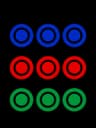
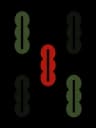
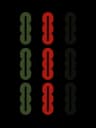
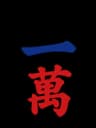
144 tiles: 108 suit tiles (dots, bamboo and characters, 1 to 9, four of each), 28 honour tiles (four each of the four winds and three dragons) and 8 bonus tiles (four flowers and four seasons). There are no jokers. The tile guide shows every tile.
What are the three suits in Hong Kong mahjong?
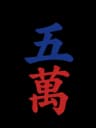
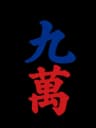
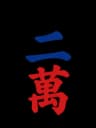
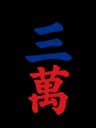
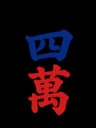
Dots (筒子, tung4 zi2), bamboo (索子, sok3 zi2) and characters (萬子, maan6 zi2), each numbered 1 to 9. Dots show circles, bamboo shows sticks, and characters show a Chinese numeral above 萬 ("ten thousand"). The 1 of bamboo is usually drawn as a bird, nicknamed 幺雞 (jiu1 gai1). The 1s and 9s are called terminals.



What are the honour tiles?
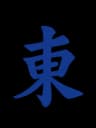
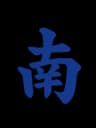
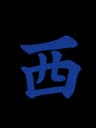
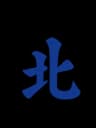
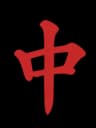
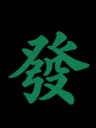
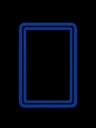
The four winds and the three dragons (字牌, zi6 paai2), four copies of each. The winds are East 東 (dung1), South 南 (naam4), West 西 (sai1) and North 北 (bak1). The dragons are Red 紅中 (hung4 zung1), Green 發財 (faat3 coi4) and White 白板 (baak6 baan2), often a blank tile or a blue frame. Honours can't form chows, only pairs, pongs and kongs.
What are the flower and season tiles?
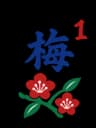
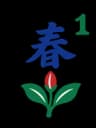
Eight bonus tiles that are never part of your hand. The flowers are Plum 梅, Orchid 蘭, Chrysanthemum 菊 and Bamboo 竹; the seasons are Spring 春, Summer 夏, Autumn 秋 and Winter 冬. Each is numbered 1 to 4, for East, South, West and North. When you get one, you set it face up and draw a replacement tile. They add faan when you win, especially the ones numbered for your own seat.
Seats, winds and the deal
What are the seat wind and the prevailing wind?
Your seat wind (門風, mun4 fung1) is the wind of your seat for the current hand; the prevailing wind (圈風, hyun1 fung1) is the wind of the current round. The East seat is the dealer (莊家, zong1 gaa1). A pong or kong of your seat wind scores 1 faan, a pong or kong of the prevailing wind scores 1 faan, and when they are the same wind you get both: 2 faan. The game always has four players, one in each wind seat.
How are the tiles dealt in Hong Kong mahjong?
The tiles are shuffled face down and built into four walls of 18 stacks, two tiles high. The dealer rolls three dice to choose where the wall is broken, then tiles are dealt four at a time, three times round the table. The dealer takes two more tiles and everyone else one, so the dealer starts with 14 and the others with 13. Everyone replaces their flowers and seasons from the back of the wall, and the dealer discards first. Some tables break the wall slightly differently. See the deal.
How does the dealer rotate in Hong Kong mahjong?
The dealer keeps the deal after winning or after a drawn hand (連莊, lin4 zong1), and passes it to the next seat when anyone else wins. When the deal passes, every player's seat wind moves on by one. Turns and the deal move counter-clockwise: East, South, West, North. Once the deal has gone all the way round the table, the prevailing wind changes.
How long is a game of Hong Kong mahjong?
A traditional full game is four rounds, East, South, West and North, and each round lasts at least four hands because the deal must pass round all four seats. Since the dealer repeats after a win or a draw, a full game often runs well over 16 hands. Many casual and online games agree a shorter length: Mahjong House's Solo Practice offers four rounds, 8 hands, 16 hands or until someone is bust, and online matches are four hands.
Playing a turn: chow, pong and kong
What happens on each turn in Hong Kong mahjong?
You draw a tile from the wall, then discard one face up, so you hold 13 tiles between turns. Before discarding you may declare a self-drawn win, a concealed kong or an added kong. If you claim another player's discard instead of drawing, you show the set you made and then discard. Play continues from the player after you. How to play walks through a turn step by step.
What is a chow, and who can chow?
A chow (上, soeng5) is a run of three consecutive tiles in one suit, such as 3-4-5 of dots. You can chow only the discard of the player immediately before you (your 上家, soeng6 gaa1). You show the run face up and discard. Honour tiles can never form a chow. Mandarin speakers call it 吃.


What is a pong (pung)?
A pong (碰, pung3), also spelled pung, is three identical tiles. You can pong a discard from any player if you already hold two of that tile, even when it isn't your turn; play then skips any players between the discarder and you. A pong of a dragon, your seat wind or the prevailing wind scores 1 faan.
What is a kong, and what kinds are there?
A kong (槓, gong3) is four identical tiles, and it counts as one set. An exposed kong (明槓) is made by claiming a discard when you hold three of that tile; an added kong (加槓) by adding the fourth tile to a pong you already showed; a concealed kong (暗槓) from four tiles you drew yourself. After any kong you draw a replacement tile from the back of the wall.
Who gets the discard when several players want it?
A win beats a pong or kong, and a pong or kong beats a chow. Only one player can hold two of a discarded tile, so pongs never clash. If two players can win on the same discard, the usual Hong Kong rule (截糊, zit6 wu4) gives the win to the player next in turn after the discarder; some tables let every player who can win do so (一炮多響). Mahjong House's standard is 截糊, with 一炮多響 as a house rule. See claim priority.
What is robbing the kong?
Winning on the tile another player adds to an exposed pong to make an added kong (搶槓, coeng2 gong3). It scores 1 faan, the player who tried to kong pays as if they had discarded the tile, and their set stays a pong. A concealed kong can't be robbed, except by a player waiting on thirteen orphans; tables differ slightly on that exception, so agree it first.
If I pass on a winning tile, can I still win later?
It depends on the table. Hong Kong mahjong has no general furiten rule like riichi, so at many tables you can win on the very next tile after letting a winning discard go. Some tables play 過水 (gwo3 seoi2): passing a win stops you winning on a discard until your next draw. Mahjong House doesn't use 過水.
What happens if nobody wins?
If the wall runs out with no winner, the hand is a draw (流局, lau4 guk6, also 荒莊). Nobody pays, and the dealer usually deals again. Being ready (聽牌) earns nothing in a draw. Some tables keep the last 14 tiles back as a dead wall and end the hand when only those remain; Mahjong House has no dead wall, so every tile can be drawn.
Winning
What does a winning hand look like in Hong Kong mahjong?
Fourteen tiles made of four sets and a pair, where a set is a chow, pong or kong (a kong counts as one set). The only common exception is thirteen orphans, which has no sets. The hand also has to reach the table's minimum faan, usually 3. Seven pairs isn't a standard Hong Kong winning hand, though some tables allow it as a house rule. See winning hands.

What is the difference between winning by self-draw and winning on a discard?
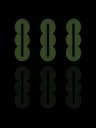
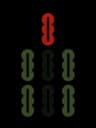
Self-draw (自摸, zi6 mo2) means you draw your winning tile from the wall; winning on a discard (食糊, sik6 wu4) means you claim another player's discarded tile. Self-draw adds 1 faan, and all three opponents pay you an equal share. On a discard win, the player who discarded the tile (出銃, ceot1 cung3, "dealing in") pays most or all of the bill.
Who pays when someone wins on a discard?
The discarder, but how much depends on the table's payment rule. Under discarder pays all (全銃, cyun4 cung3), the discarder pays three units alone; it's Mahjong House's standard. Under half responsibility (半銃, bun3 cung3), the discarder pays two units and each of the other two players one. Some tables have the discarder pay a double share alone. Agree it before you start; see the payout table.
What is a ready hand, and what are waits?
A ready hand (叫糊, giu3 wu4, also 聽牌) is one tile away from winning, and your waits are the tiles that would complete it. A two-sided wait such as 4-5 (waiting on 3 or 6) can have up to 8 live tiles. An edge wait (1-2 waiting on 3) or middle wait (4-6 waiting on 5) has at most 4, and a single wait on a pair at most 3. More live tiles means a better chance of winning.
Does seven pairs count in Hong Kong mahjong?
Not under standard Hong Kong rules. Seven pairs (七對子) isn't four sets and a pair, so it isn't a winning hand at most tables. Some tables score it as a house rule, usually at 3 or 4 faan. Mahjong House doesn't offer it.
Faan: how hands are scored
What is faan in mahjong?
Faan (番, faan1) is the scoring unit of Hong Kong mahjong. Each pattern in your hand and each special way of winning is worth some faan, and you add them up. The total decides whether you can win at all (the minimum) and how much you are paid. It is usually capped, most often at 10 faan. To count a hand, use the faan calculator.
How many faan is a chicken hand?
A chicken hand (雞糊, gai1 wu4) is 0 faan for its pattern, because it has no scoring shape. It can still win when other faan bring it to the table's minimum: under a 3-faan minimum, a concealed hand (1) won by self-draw (1) with no flowers (1) reaches 3. The same hand won on a discard is only 2 faan and can't win. See the 3-faan minimum.
How many faan is all chows (ping wu)?
1 faan. All chows (平糊, ping4 wu4), sometimes called common hand, is four chows and a pair. Mahjong House's standard rules, like many tables, also require that the pair isn't a dragon, your seat wind or the prevailing wind, and that the winning tile completes a two-sided wait. Other tables accept any four chows and a pair.
How many faan is all pongs?
3 faan. All pongs (對對糊, deoi3 deoi3 wu4), also called all triplets or all pungs, is four pongs or kongs and a pair, with no chows; the pongs can be claimed. With half flush it makes 6 faan, and with full flush 10. If all four pongs were drawn yourself, it's four concealed pongs, a limit hand.
How many faan are half flush and full flush?
Half flush 3, full flush 7. A half flush (混一色, wan6 jat1 sik1, mixed one suit) is one suit plus honour tiles; a full flush (清一色, cing1 jat1 sik1, pure one suit) is one suit with no honours at all. They never count together: a full flush is 7, not 7 plus 3. See winning hands.
How many faan do dragon pongs and the three-dragon hands score?
Each pong or kong of a dragon is 1 faan. Little three dragons (小三元, siu2 saam1 jyun4), two dragon pongs and a pair of the third, is 5 in total; big three dragons (大三元, daai6 saam1 jyun4), pongs or kongs of all three, is 8 in total. Both totals already include the dragon pongs, so don't add them again. In Mahjong House big three dragons isn't a limit hand.
How many faan do the wind hands score?
A pong or kong of your seat wind is 1 faan, and of the prevailing wind 1 faan. Little four winds (小四喜, siu2 sei3 hei2), three wind pongs and a pair of the fourth, is 6. Big four winds (大四喜, daai6 sei3 hei2), pongs or kongs of all four winds, is a limit hand. Tables differ on whether seat and prevailing wind faan are added to little four winds; Mahjong House doesn't add them for those winds.
How do flowers and seasons score?
Each flower or season numbered for your seat (正花, zing3 faa1) is 1 faan, so East scores Plum and Spring; your flower and your season count separately. A complete set of four flowers or four seasons (一台花, jat1 toi4 faa1) is 2 faan, replacing the seat-tile faan in that set. Winning with no bonus tiles at all (無花, mou4 faa1) is 1 faan at most tables. Collecting all eight wins at once; its value varies by table, from 8 faan to the limit, and it is exactly 8 in Mahjong House.
How many faan are self-draw and a concealed hand?
1 faan each, and they stack, so a concealed hand won by self-draw starts at 2. A concealed hand (門前清, mun4 cin4 cing1) has no chow, pong or exposed kong. Tables differ on the details; in Mahjong House's standard rules the concealed hand still counts when you win on a discard, a concealed kong ends it, and flowers don't affect it.
Which special ways of winning add faan?
Five situations add 1 faan each: winning on the replacement tile after a kong (槓上開花, gong3 soeng6 hoi1 faa1), winning on a flower's replacement tile, robbing the kong (搶槓), self-drawing the last tile of the wall (海底撈月, "fishing the moon from the sea") and winning on the last discard (海底炮). The replacement-tile wins and the last-tile self-draw are also self-draws, so they come to 2 faan with Self-draw.
Every hand and its faan at a glance. Click a hand for its full entry in the faan table.
| Hand or way of winning | Chinese | Faan |
|---|---|---|
| Self-draw | 自摸 | 1 |
| Concealed hand | 門前清 | 1 |
| Win on kong replacement | 槓上自摸 | 1 |
| Win on flower replacement | 花上自摸 | 1 |
| Robbing the kong | 搶槓 | 1 |
| Last tile of the wall | 海底撈月 | 1 |
| Last discard | 海底炮 | 1 |
| Seat flower or season | 正花 | 1 each |
| Full flower or season set | 一台花 | 2 per set |
| No bonus tiles | 無花 | 1 |
| All eight bonus tiles | 八仙過海 | 8 |
| Dragon pong | 紅中/發財/白板 | 1 each |
| Seat wind pong | 門風 | 1 |
| Prevailing wind pong | 圈風 | 1 |
| Little three dragons | 小三元 | 5 |
| Big three dragons | 大三元 | 8 |
| Little four winds | 小四喜 | 6 |
| Chicken hand | 雞糊 | 0 |
| All chows | 平糊 | 1 |
| All pongs | 對對糊 | 3 |
| Half flush | 混一色 | 3 |
| Mixed terminals | 混么九 | 4 |
| Full flush | 清一色 | 7 |
| Seven pairs | 七對子 | Not a winning hand in Mahjong House |
*Common combinations:* half flush + all pongs = 6; full flush + all pongs = 10 (the usual cap); concealed hand + self-draw + no flowers = 3.
Limit hands
What is a limit hand in Hong Kong mahjong?
A rare hand that scores the table's maximum faan outright (例牌, lai6 paai4; reaching the cap is 爆棚, baau3 paang4, "bursting the shed"). Nothing else is added: self-draw, flowers and winds don't raise it. With the common 10-faan cap a limit hand is worth 10; with a 13-faan cap, 13. Which hands count as limits varies a little between tables.
Which hands are limit hands?
The commonly recognised limit hands are thirteen orphans (十三么), nine gates (九蓮寶燈), big four winds (大四喜), all honours (字一色), pure terminals (清么九), four concealed pongs (坎坎糊), four kongs (十八羅漢), heavenly hand (天糊) and earthly hand (地糊). Mahjong House treats all nine as limit hands. Some tables score a few, such as all honours or four concealed pongs, at a fixed faan below the limit. See limit hands.
What is thirteen orphans?
A limit hand (十三么, sap6 saam1 jiu1) made of one of each terminal and honour, the 1 and 9 of all three suits, the four winds and the three dragons, plus a second copy of any one of them. It is the only common winning hand that isn't four sets and a pair. It must be concealed, but the winning tile can be a discard, and a player waiting on it may even rob a concealed kong.
What is the maximum faan in Hong Kong mahjong?
Most Hong Kong tables cap a hand at 10 faan (十番滿糊), and some play to 13. A hand that adds up to more than the cap is paid as the cap, and limit hands score exactly the cap. Lower caps, such as 8 faan, are sometimes agreed to keep scores small. Mahjong House's standard is 10; Solo Practice and Play with Friends can use 13.
| Limit hand | Chinese | What it is |
|---|---|---|
| Thirteen orphans | 十三么 | One of each 1 and 9 of the three suits, each wind and each dragon, plus a second of any of them. Must be concealed; may be won on a discard. |
| Nine gates | 九蓮寶燈 | Concealed 1-1-1-2-3-4-5-6-7-8-9-9-9 of one suit, plus any other tile of that suit. |
| Four kongs | 十八羅漢 | Four kongs of any kind, and a pair. |
| Big four winds | 大四喜 | Pongs or kongs of all four winds. |
| All honours | 字一色 | Only winds and dragons. |
| Pure terminals | 清么九 | Only 1s and 9s, in pongs and a pair. |
| Four concealed pongs | 坎坎糊 | Four pongs (or concealed kongs) all drawn yourself. Win by self-draw, or on a discard only for the pair. |
| Heavenly hand | 天糊 | The dealer's first 14 tiles, after flowers are replaced, already win. |
| Earthly hand | 地糊 | A non-dealer wins on the dealer's first discard, before anyone has claimed a tile. |
The minimum faan
What is the 3-faan minimum (三番起糊)?
A hand must be worth at least 3 faan before you can declare a win (三番起糊, saam1 faan1 hei2 wu4). A complete hand worth 0, 1 or 2 faan simply can't win, and you keep playing. It's the most common minimum in Hong Kong; casual tables sometimes lower it to 1 or 0. See the 3-faan minimum.
Why do most Hong Kong tables play a 3-faan minimum?
It stops cheap, patternless wins and makes players plan a scoring route from the first discards. Without a minimum the fastest chicken hand usually wins, and the game becomes a race. With 3 faan, players aim for honour pongs, flushes, all pongs or concealed self-draws, which makes hands longer and more strategic, and makes defence matter, because every win is worth something.
Can a chicken hand ever win under a 3-faan minimum?
Yes, if its other faan reach 3. The pattern is worth nothing, but faan for how you won and for your flowers still count. A concealed self-drawn hand with no flowers (1 + 1 + 1), or with your own seat flower instead (1 + 1 + 1), reaches 3 and can win. Won on a discard, the same chicken hand usually falls short.
From faan to points: payment
How do faan turn into points?
Through a doubling table agreed before play. The most common in Hong Kong is half-spicy (半辣上, bun3 laat6 soeng5), where the payment doubles every two faan from 4. Each table agrees its own scale, so there is no standard amount per point. In Mahjong House scores are jade (玉), points with no cash value.
What is the difference between half-spicy and spicy scoring?
Both start the same, but spicy grows much faster. Half-spicy (半辣上) doubles the payment every two faan from 4 faan up. Spicy (辣辣上, laat6 laat6 soeng5), also called full spicy, doubles it every faan. In Mahjong House one unit at 10 faan is 64 points on half-spicy but 512 on spicy, so big hands are worth far more.
How much is a 3-faan or 10-faan hand worth?
In Mahjong House's standard half-spicy table, one unit is 4 points at 3 faan and 64 at 10 faan. On a self-draw each of the three opponents pays one unit, so a 3-faan self-draw collects 12. On a 3-faan discard win under discarder pays all, the discarder pays all 12. Home tables often use the same doubling shape with their own base amount. The table below has every faan from 3 to 10.
| Faan | Self-draw: each of 3 pays | Self-draw: winner gets | 全銃: discarder pays (all) | 半銃: discarder pays | 半銃: other two pay, each | 半銃: winner gets |
|---|---|---|---|---|---|---|
| 3 | 4 | 12 | 12 | 8 | 4 | 16 |
| 4 | 8 | 24 | 24 | 16 | 8 | 32 |
| 5 | 12 | 36 | 36 | 24 | 12 | 48 |
| 6 | 16 | 48 | 48 | 32 | 16 | 64 |
| 7 | 24 | 72 | 72 | 48 | 24 | 96 |
| 8 | 32 | 96 | 96 | 64 | 32 | 128 |
| 9 | 48 | 144 | 144 | 96 | 48 | 192 |
| 10 | 64 | 192 | 192 | 128 | 64 | 256 |
*Example:* you win a half flush with all pongs (6 faan) on a discard. Under half-spicy and 全銃 the discarder pays 3 × 16 = 48 and the other two pay nothing; under 半銃 the discarder pays 32 and the other two 16 each.
What is paying for everyone (包)?
One player pays the winner's whole amount alone (包, baau1, full responsibility) because their discard directly set up a big hand, even if the winner then self-draws. Mahjong House applies it in three cases: feeding the third dragon to a player showing two dragon pongs, feeding the fourth wind to a player showing three wind pongs, and giving a player their fourth kong. Some tables add more, for example for a full flush after three exposed sets of one suit. See the payout table.
Penalties and house rules
What is the penalty for a false win?
A false win (詐糊, zaa3 wu4) is declaring a win with a hand that isn't valid or doesn't reach the minimum, and it is punished heavily: commonly the offender pays all three opponents as if each had won a limit hand. The exact penalty varies, so agree it before you play. In Mahjong House the game only lets you declare valid wins, so a false win can't happen.
What happens if you have the wrong number of tiles?
At many Hong Kong tables a player with too many or too few tiles is a 相公 (soeng3 gung1) and can't win that hand. They usually keep drawing and discarding, and can still be made to pay if someone else wins. The exact rule is table custom. It can't happen in an app, which keeps the tile count for you.
Which house rules vary most between Hong Kong tables?
The minimum faan (3, 1 or 0), the cap (10, 13 or lower), how a discard win is paid (全銃 or 半銃), the payout table (half-spicy or spicy) and how flowers score. Tables also differ on multiple winners on one discard, 過水, seven pairs, a 14-tile dead wall and extra 包 rules. Agree the house rules (枱例, toi2 lai6) before the first hand. See house rules.
Etiquette and Cantonese table phrases
What are the basic etiquette rules at a Hong Kong mahjong table?
Agree the house rules and the scoring scale before the first tile is dealt, and keep a steady pace. Call claims clearly and promptly, and don't take back a tile once it is discarded. Don't touch other players' tiles or the wall out of turn, or comment on anyone's hand during play. Settle up straight after each win.
What do players say at a Cantonese mahjong table?
食!(sik6, "win!") when you claim a discard to win, 自摸!(zi6 mo2) as you show a self-drawn win, 碰!(pung3) to pong and 上!(soeng5) to chow. 開枱 (hoi1 toi2), "open the table", means starting a game, and 幾多番?(gei2 do1 faan1), "how many faan?", follows every win. The glossary has more than 70 terms with jyutping.
Strategy basics for beginners
What is the most important strategy tip for Hong Kong mahjong beginners?
Plan your route to the minimum faan from your first few discards. Under a 3-faan minimum a complete hand with no faan is useless, so look early for a half flush, all pongs, honour pongs or a concealed self-draw, and keep the tiles that support the route you can realistically reach. See strategy.
When should you pong or chow in Hong Kong mahjong?
Claim when the tile moves you toward a hand that reaches the minimum, and pass when it doesn't. Ponging a dragon, your seat wind or the prevailing wind is usually good, because it adds a faan. A chow gives up the concealed-hand faan and rarely adds faan by itself, so it is best when you are already on a flush or racing to finish. Every exposed set also tells opponents what you are collecting.
How do you avoid dealing in?
Discard tiles the player you fear has already thrown, and tiles already seen several times. Late in a hand, a tile nobody has discarded yet (生章, saang1 zoeng1) is riskier than one already seen (熟章, suk6 zoeng1). If an opponent shows a strong hand and yours is far from ready, fold by throwing only safe tiles (收章, sau1 zoeng1). Under discarder pays all, avoiding one big deal-in can matter more than winning a small hand. See defence.
Play Hong Kong mahjong in Mahjong House
Where can I play Hong Kong mahjong online?
In Mahjong House (麻雀館), a free Hong Kong mahjong game on the App Store for iPhone and iPad, on Google Play for Android, and in a web browser at play.mahjonghouse.app with no download or sign-up. Practise solo against twelve computer players at three difficulty levels, or play online Quick Match and Ranked against real people; browser and app players meet at the same tables. See play mahjong online.
Does Mahjong House use real Hong Kong rules?
Yes: a 3-faan minimum, a 10-faan cap, all 144 tiles with flowers and seasons, half-spicy payouts and the discarder paying for a discard win (全銃). A chicken hand wins only when self-draw, a concealed hand and flowers bring it to 3 faan, and seven pairs isn't a winning hand. Online Quick Match and Ranked always use these standard rules; in Solo Practice and Play with Friends you can change them in House Rules, including a 0- or 1-faan minimum.
Is Mahjong House free, and is it gambling?
The whole game is free, and it isn't gambling. Scores are jade (玉), points with no cash value that can't be bought, sold or exchanged, and there are no prizes. The apps offer optional purchases (Remove Ads, and the Sifu coaching subscription); the browser version has no ads and nothing to buy.
Can I play Hong Kong mahjong with friends in Mahjong House?
Yes. Open a private room, choose your house rules, and invite friends by link, code or QR. They join from the app or straight from a web browser, and computer players fill any empty seats, so two or three of you can still play a full table. See mahjong with friends.
Is there a coach that teaches Hong Kong mahjong?
Yes. Mahjong House has Sifu (師傅), an optional coaching subscription for solo games. Sifu lights up the best discard with the reason, colours each tile by how safe it is to throw, advises on claims, shows your route to 3 faan and your waits, and reviews your biggest mistakes after each hand. Not ready to subscribe? In the iPhone, iPad and Android apps a short video unlocks one free Sifu game. The lessons, solo play and online matches are free for everyone. To learn without a coach, start with learn to play.
